
Why Can’t Fresh Flowers Be Kept with Fruit? Understanding the Effects of Ethylene on Flowers
Fresh flowers and fruit are both popular gifts. Their vibrant colours and natural appearance can brighten any indoor space. As a result, many people place a bouquet and a fruit basket on the same table after receiving them, sometimes positioning the fruit directly beside the flower vase. However, from the perspectives of plant biology, storage conditions and hygiene, fresh flowers should not be kept close to fruit for extended periods. Doing so may shorten the lifespan of the flowers and could also affect the quality of the fruit.
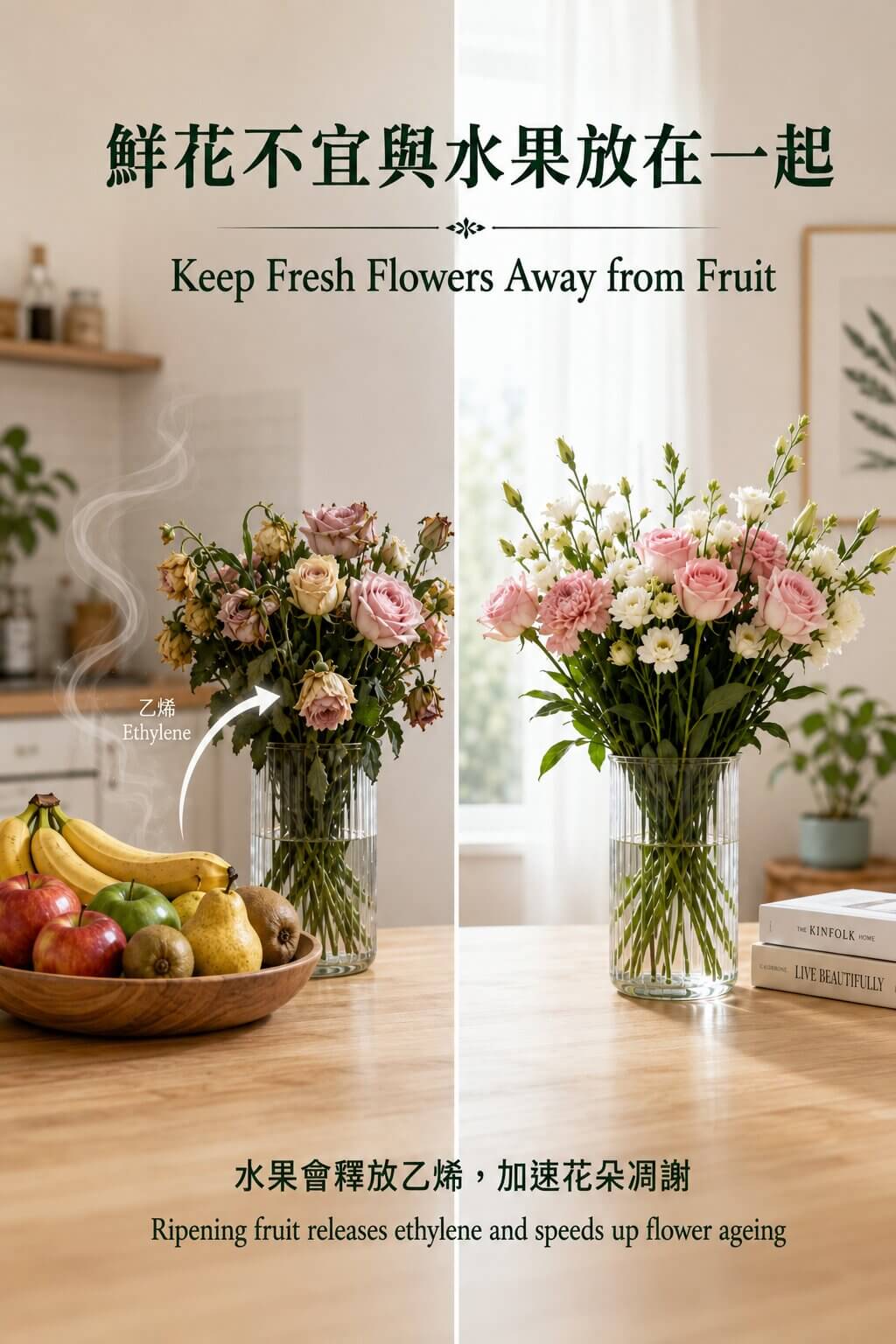
The main reason is that ripening fruit releases a natural plant hormone called ethylene. Ethylene is a colourless gas with a faint smell. It promotes fruit ripening, plant ageing and the deterioration of plant tissue. Apples, bananas, pears, peaches, avocados, mangoes, papayas, tomatoes and kiwifruit are among the fruits that commonly produce significant amounts of ethylene. In general, the riper the fruit becomes, the more ethylene it releases. Bruised, overripe or decaying fruit may produce even higher levels of the gas.
Fresh flowers can be highly sensitive to ethylene. When flowers are exposed to it for an extended period, their petals and leaves may age more quickly. Common signs include premature wilting, unopened buds falling off, drooping flower heads, yellowing leaves, and petals developing dry or discoloured edges. Some flowers may show visible deterioration after exposure to even a relatively small amount of ethylene.
A bouquet that would normally remain attractive for several days, or even longer than a week, may therefore have a significantly shorter vase life when placed beside ripening fruit.
Different flowers have varying levels of sensitivity to ethylene. Carnations, roses, lilies, orchids, hydrangeas, freesias and certain flowers in the daisy family may all be affected. In carnations, for example, ethylene can cause the petals to curl inwards and wilt rapidly. Orchid flowers may fall prematurely after exposure, while lily buds may fail to open properly.
Even if certain varieties respond more slowly to ethylene, this does not mean that they are completely unaffected. To preserve the overall freshness and appearance of a bouquet, the safest approach is to keep fresh flowers and fruit in separate locations.
In addition to the effects of ethylene, flowers and fruit often require different storage conditions. Fresh flowers generally last longer when kept in a cool, well-ventilated area away from direct sunlight. Their water should be changed regularly, and the stems should be trimmed to support water absorption.
Fruit, depending on its type and stage of ripeness, may need to be kept at room temperature to continue ripening or stored in a refrigerator to preserve its quality. If flowers are placed in a warm location to accommodate the fruit, water may evaporate more quickly from their petals and leaves. This can lead to dehydration, drooping and premature drying.
Conversely, some tropical fruits may suffer cold damage if stored at temperatures that are suitable for certain flowers. Their skin may darken, and the texture or flavour of the flesh may deteriorate.
Natural yeast, bacteria and mould on the surface of fruit can also increase the number of microorganisms around fresh flowers. Cut, bruised or overripe fruit is particularly likely to leak juice and encourage microbial growth. If fruit juice, pieces of peel or other contaminants enter a flower vase, bacteria may multiply rapidly in the water.
These bacteria can block the water-conducting vessels inside the flower stems, preventing the flowers from absorbing water properly. Even when there appears to be plenty of water in the vase, the flowers may still wilt quickly because their stems can no longer take in enough moisture.
Fresh flowers may also be unsuitable for placing directly beside food. Commercial flowers may come into contact with fertilisers, agricultural treatments, preservatives or other substances during cultivation, transportation and storage. Pollen, fallen leaves, floral foam particles and vase water may also contaminate nearby fruit.
If the fruit is intended for consumption, the petals, leaves and stems should not be allowed to touch it directly. Unless flowers are clearly labelled as edible, decorative flowers should not be used as food decorations or placed in direct contact with unpackaged food.
It is important to note that placing a bouquet beside a fruit basket briefly for photography or a temporary display is unlikely to cause immediate and serious damage. The greater risk comes from keeping the two together for a prolonged period in a small, enclosed or poorly ventilated space.
Examples include closed rooms, display cabinets, packaging boxes and refrigerators. In enclosed environments, ethylene can gradually accumulate, increasing its effect on the flowers.
The correct approach is to keep flowers and fruit separate, preferably on different surfaces or in different rooms, while maintaining good air circulation. Fresh flowers should be kept away from ripening fruit, direct sunlight, heaters, air-conditioning vents and heat-producing electrical appliances.
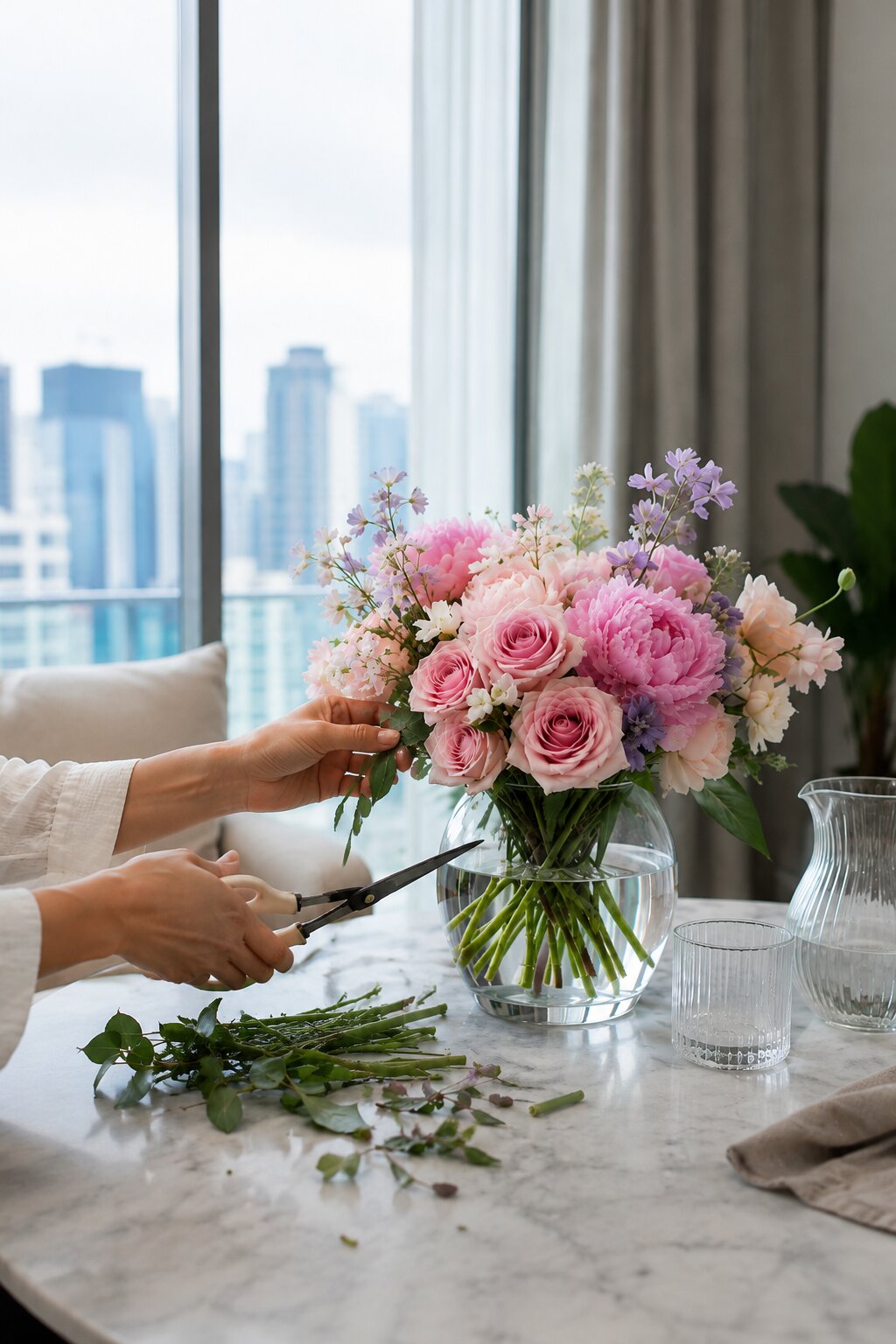
After receiving a bouquet, remove any unnecessary wrapping, trim approximately one to two centimetres from the stems at an angle, and place the flowers in a clean vase. The vase water should be replaced daily or every other day. Any leaves below the waterline should also be removed to reduce bacterial growth.
Fruit should be stored according to its variety and level of ripeness. Overripe, damaged or mouldy fruit should be removed promptly and should not remain close to fresh flowers.
When receiving both a bouquet and a fruit basket, consider placing the fruit basket in the dining room or kitchen and displaying the flowers in the living room, entrance hall or another cool area. This arrangement maintains an attractive presentation while helping both the flowers and fruit remain in their best condition for longer.
In conclusion, fresh flowers should not be kept close to fruit primarily because ripening fruit releases ethylene, which accelerates the ageing and wilting of flowers. Flowers and fruit also have different temperature, humidity and storage requirements. In addition, microorganisms and juice from fruit may contaminate vase water, while decorative flowers may present hygiene concerns when placed near food.
Keeping fresh flowers and fruit separate in clean, cool and well-ventilated locations is therefore the best way to extend the vase life of flowers while preserving the freshness and quality of the fruit.